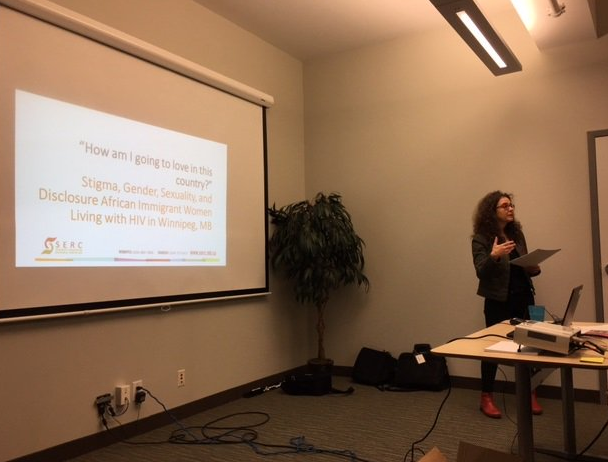
December 1st was World AIDS Day. Every year our community comes together to host events and public campaigns to honour this date. In Manitoba, this is led by our partners at Nine Circles, who are the leaders in HIV prevention and planning in Manitoba. You still have time to participate in the Hands Up for HIV Prevention contest- you can read what our Sexuality and Reproductive Heath Facilitator Linda wrote in the Pilipino Express about it, for the Ask Ate Ana column. “Across the country, the week of November 21 to December 1 marks Canadian HIV/AIDS Awareness Week. It’s an occasion to raise awareness surrounding HIV/AIDS issues nationally and culminates in the international observance of World AIDS Day on December 1st of each year – a day dedicated to increasing awareness of HIV/AIDS issues worldwide as we support the UNAIDS visionary goal to end the AIDS epidemic by 2030.” http://www.cdnaids.ca/events/world-aids-day/ The 2016 WAD campaign is called Sex Happens and focuses on the importance of getting tested even if you are in a relationship. You can participate using hashtags like #WorldAIDSDay2016 and #SexHappens – the goal is always to raise numbers for testing and treatment; in Canada 21% of people infected do not know it, and the reality is that with HIV in the modern world, treatment is prevention. So why don’t people get tested? One of the reasons that we know people may avoid testing is the myths, stigma and discrimination surrounding HIV and AIDS. We know that the criminalization of HIV through mandatory status reporting has probably increased the likelihood of people taking the stance of ‘better not to know’, particularly in historically stigmatized communities. At SERC (Sexuality Education Resource Centre MB) we use our community development approach, and history working with immigrant communities, to better understand this issue and decrease stigmatization. In honour of World AIDS Day, we released a report on the work and qualitative research we have been doing through the Knowledge Into Action (KIA) project with African immigrant women who have HIV in Winnipeg. The goal of the study is the goal of the study is to explore and understand experiences of care and support. I had the opportunity to sit in as our research and evaluation coordinator Paula presented the results to a packed room of service providers and partners on December 2nd. The goal of the presentation was to interpret stigma affects women’s understandings of their intimate relationships and, more broadly women’s sexuality.  She started with talking about what stigma is so we can all be on the same page. Here are the definitions SERC used:
She started with talking about what stigma is so we can all be on the same page. Here are the definitions SERC used: - Stigma is an attribute, behavior, or reputation which is socially discrediting in a particular way
- Intersectional Stigma – multi-layered stigmas based on multiple identities of women living with HIV (e.g., race, gender, gender identity, race, national identity, migration, race)
- Racialized women in Canada are particularly dis-proportionally affected by HIV.
- According to 2013 national surveillance data, about 40 percent of new HIV diagnoses in women were identified a “Black” (PHAC 2014).
- A high proportion of women living with HIV were born outside Canada (PHAC 2009)
- Arrived in Canada between 4 and 18 years ago. Most have been in Canada under 7 years.
- Identifying 6 different African countries as their country of origin. Many having lived in other African countries prior moving to Canada.
- All of them have children, and most live with their families. A few were single, and a few were in serodiscordant relationships.
- Most were diagnosed with HIV prior coming to Canada, a few through the immigration process.
- All were receiving clinical care for their HIV.